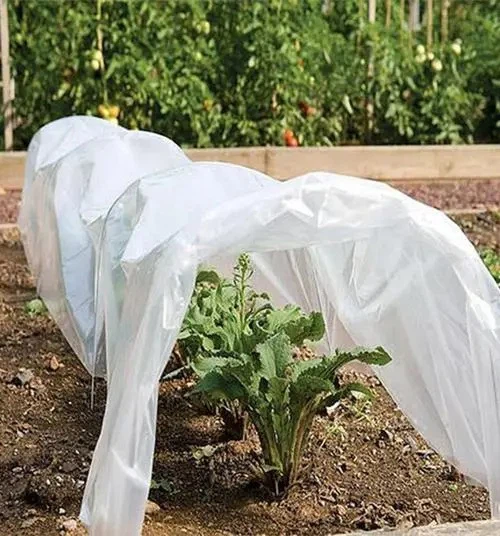
Non-woven fabric is a kind of material with moisture-proof and breathable effect. It does not need woven fabrics, only short fibers or filaments need to be oriented or randomly arranged to form a mesh structure. So what is the role of non-woven fabrics in cultivating seedlings, let's take a look.
When the non-woven fabric is placed at the bottom of the tray, it can ensure that the tray is not sticky during seedling raising, and improve the seedling raising efficiency. Control water 7 to 10 days before transplanting, combined with seedbed management before transplanting. If there is water shortage in the middle, a small amount of water can be added appropriately, but the nursery bed should be kept as dry as possible. Sandy soil seedbeds are easy to be free from mud when non-woven seedlings are raised. If it is a seedbed containing white soil or cohesive soil, or woven fabrics are used, it is recommended to use non-woven fabrics instead of woven fabrics. However, it is recommended to swing the tray while spreading gauze, and fill the lower tray with floating soil in time. The gauze should not be stretched too tightly to prevent the tray from hanging in the air.
The non-woven fabric is spread on the plate and under the plastic film. The process is generally to sow and cover the soil, and then cover the cloth in turn. It can have the corresponding heat preservation and moisturizing effect without direct contact with the plastic film, and the seedlings are not afraid of roasting. If some plants are watered after planting, the non-woven fabric can also prevent the water from washing the soil, causing the seeds to be exposed.
Non-woven fabrics cover seedbeds to prevent drastic changes in temperature, but everything grows by the sun, and mulch seriously affects moisture retention, so there is no need to say more about the role of non-woven fabrics in agriculture.